

Smoke across the ocean: How Canadian wildfires are impacting UK skies
The eerie glow of a distant fire: A reflection on the climate crisis
Over the weekend, I’d travelled to Dorset, to immerse in nature and I felt a shift in the light. It was one of those moments when nature whispers, asking you to pause and notice the subtle changes. The sun seemed less intense, casting a strange, autumnal hue across the fields, but weirdly it was 3pm that felt too early in the day for that kind of light. I mentioned it to my friend, remarking on how peculiar it was that the light had taken on an eerie quality, as though summer was being swallowed by an early autumn. Little did I know, this shift was a far more ominous sign than a seasonal change.

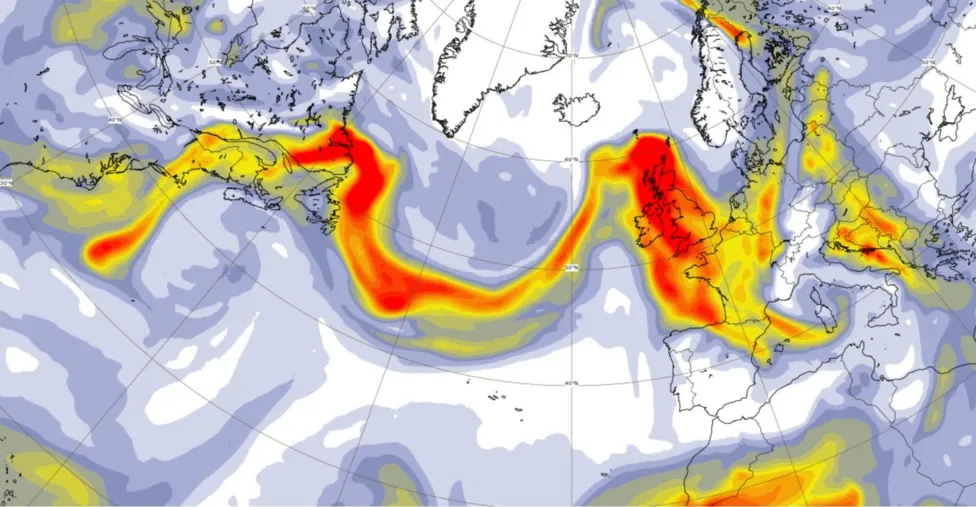
I saw a headline pop up on social media as we were walking back to the car from Lulworth Cove: “UK to Look Forward to Enhanced Sunsets Tonight” that I realised the true cause of this unsettling change to the sunlight. The article went on to explain how smoke from Canadian wildfires had traveled across the Atlantic, riding on the high-altitude jet stream, and was now blocking our sun, creating this hazy quality to the atmosphere.
We’d headed to Durdle Door at about 6pm, still 2.5 hours ahead of sunset and yet it felt like the sun was close to setting, golden light pouring along the coast. So many people were gleefully remarking at the ‘amazing sunset’ the sun’s intensity continued to fade. I told people why and it was surreal to witness the ambivalent reactions.


A wave of horror washed over me in this moment. How could mainstream media celebrate these “enhanced sunsets” without acknowledging the terrifying reality behind them? How could people be so dismissive and uninterested in what we were witnessing, too pre-occupied with taking selfies. This was no ordinary atmospheric event. We were witnessing a direct consequence of the climate crisis—a crisis that had transported smoke from wildfires thousands of miles away, dimming our daylight and turning our sunsets into a darkness early.

The intensity of the light was so diffuse through the smoke haze, I could see sunspots on its surface—a sight normally obscured by the sun’s brightness. You can see some of the sunspots below and prominences and you can also see the lines of smoke over the sun.

It was time to drive home and it felt a lot later than it was. I was struggling to work out where the sun was in the sky, there were no clouds and yet, I couldn’t tell where the sun was when I was driving. Then we turned a bend in the road and there it was, diffuse red, obscured by such a thick layer of smoke, you could literally see the lines of smoke in the atmosphere painting shadow lines across the sun.

Then the most shocking moment, I released there was no birdsong. The air felt cooler, almost damp, like the kind of evening that signals the end of dusk, yet the sun was still high in the sky, perhaps with at least 20 – 30 minutes to set. We stood witnessing the sun set above the horizon, being consumed by the thick smoke in the atmosphere and disappearing.

Record-Breaking Wildfires: A Climate Catastrophe
The wildfires in Canada have been nothing short of catastrophic. The 2023 wildfire season was record-breaking, with an unprecedented number of fires raging across the country. Over 100 million tonnes of carbon dioxide were released into the atmosphere—a staggering contribution to global emissions that is accelerating the pace of climate change. As we move through 2024, it’s clear that we’re on track to break those records once again. Jasper, one of Canada’s iconic natural treasures, has been evacuated as flames creep closer, and currently, there are more than 1,000 wildfires burning across the country, with hundreds still out of control.

The smoke from these fires has not only blanketed much of North America, causing hazardous air quality from coast to coast and as we witnessed this weekend, it has also reached Europe. In New York City, the skyline is cloaked in a thick haze, with air quality plummeting as smoke from these distant fires lingers in the atmosphere . The fact that we are breathing in the remnants of a crisis happening across the ocean is a stark reminder that there is no escape from the consequences of our actions—or inactions.
Witnessing the climate crisis in real time
In that moment, I was overwhelmed by a profound sense of loss. The systems and structures that uphold the fossil fuel industry, enabling the relentless exploitation of oil and gas for the profit of a few, are jeopardising all life on Earth. Yet, when I told people on the cliffs about the reason behind the sun’s strange behaviour, the reactions were disheartening: “Cool story” or “Ah, okay, it’s still pretty though.” This indifference is a symptom of a much larger issue—a systemic numbness that disconnects us from nature and from our own sense of agency and responsibility.
Top 10 facts about wildfires and their global threats

1. Wildfires are increasing in frequency and intensity
- Fact: The number and severity of wildfires worldwide have increased significantly over the past few decades. According to the Global Forest Watch, the average number of wildfires globally has risen by 19% since 2001.
- Reason: Climate change is the primary driver, leading to hotter temperatures, prolonged droughts, and altered precipitation patterns, all of which create ideal conditions for wildfires to ignite and spread.
2. Wildfires release massive amounts of carbon dioxide
- Fact: Wildfires release vast quantities of carbon dioxide (CO2) into the atmosphere. In 2023, Canadian wildfires alone emitted over 100 million tonnes of CO2, equivalent to the annual emissions of some small countries.
- Threat: These emissions contribute to the greenhouse effect, further exacerbating global warming and creating a vicious cycle where hotter temperatures lead to more wildfires.

3. Wildfires are a major source of air pollution
- Fact: Wildfires generate significant amounts of particulate matter and other pollutants, leading to hazardous air quality. The 2023 Canadian wildfires, for example, caused severe air quality issues across North America and even reached Europe.
- Threat: Air pollution from wildfires can cause respiratory problems, cardiovascular diseases, and other health issues, affecting millions of people far beyond the immediate fire zones.
4. Wildfires are becoming more common in areas not traditionally prone to fires
- Fact: Regions not historically known for wildfires, such as parts of the Arctic and the UK, are now experiencing them. This is largely due to changing climate patterns and human activity.
- Threat: This expansion into new regions increases the risk to biodiversity, human life, and infrastructure, as these areas are often ill-prepared to deal with such fires.

5. Wildfires devastate biodiversity
- Fact: Wildfires destroy habitats and kill countless animals and plants. The 2019–2020 Australian bushfires, for example, are estimated to have killed or displaced nearly 3 billion animals.
- Threat: The loss of biodiversity can lead to the collapse of ecosystems, which are crucial for services such as pollination, water purification, and climate regulation.
6. Wildfires contribute to climate feedback loops
- Fact: Wildfires burn forests and peatlands that act as carbon sinks, releasing stored carbon into the atmosphere. The loss of these carbon sinks reduces the Earth’s ability to absorb CO2, accelerating global warming.
- Threat: This feedback loop makes it increasingly difficult to combat climate change, as the effects of wildfires themselves contribute to conditions that cause more fires.

7. Human activity is a major cause of wildfires
- Fact: Human activities, such as agriculture, deforestation, and careless behavior (like discarded cigarettes or unattended campfires), are responsible for up to 85% of wildfires worldwide.
- Threat: As human populations grow and encroach further into wildlands, the risk of accidental or intentional ignition of wildfires increases, making prevention efforts more critical.
8. Wildfires displace people
- Fact: Wildfires force millions of people to evacuate their homes each year. The 2018 Camp Fire in California alone displaced over 50,000 people.
- Threat: Displacement leads to long-term social and economic challenges, including loss of property, disruption of communities, and increased pressure on urban areas that must accommodate evacuees.

9. Wildfires impact water quality
- Fact: Wildfires can contaminate water supplies by causing soil erosion, which leads to increased sedimentation in rivers and reservoirs, and by introducing harmful chemicals from burnt materials into water sources.
- Threat: Contaminated water can harm aquatic life and pose serious health risks to human populations, particularly in areas where clean water is already scarce.
10. Wildfires are expected to become more severe in the future
- Fact: Scientific models predict that the frequency, intensity, and duration of wildfires will continue to increase due to ongoing climate change. By 2050, the area burned by wildfires globally could increase by 50%.
- Threat: This projection indicates a growing global threat, with more regions experiencing devastating wildfires, leading to greater loss of life, property, and environmental damage.

Why are wildfires happening?
The rise in wildfires can be attributed to a combination of factors, with climate change being the most significant. Warmer temperatures, prolonged droughts, and erratic weather patterns create the perfect conditions for wildfires to ignite and spread. Human activities, such as deforestation, agricultural expansion, and urban development, increase the likelihood of fires starting, while poor land management and fire suppression policies often exacerbate the situation. The interplay of these factors has led to a global increase in wildfires, posing a growing threat to ecosystems, human health, and the planet’s climate stability.
What’s happening in Canada is not just a Canadian problem, nor is it just a North American problem. The smoke that has darkened our skies is a symbol of our interconnectedness. It is a reminder that the climate crisis knows no borders, and its effects are not confined to the places where the flames burn brightest. When the sun is dimmed all day long by smoke from wildfires across the ocean, it becomes impossible to ignore the fact that we are all witnesses to this unfolding disaster.
The question is, will we continue to look away, dismissing these events as distant tragedies that do not affect us directly? Or will we finally confront the reality that the climate crisis is here, now, and impacting all of us—no matter where we live? The time for complacency is over. We must wake up to the truth that our planet is burning, and with it, our future is going up in smoke.
While I feel a deep sorrow for what we are losing, I also felt a flicker of hope, because in acknowledging the reality of our situation, we begin to take the first steps toward change. We are not powerless. We are not without agency. But we must act, and we must act now, before the sun sets on our future for good.

→ Read: The Yorkshire Moors are burning: The myth of ‘wild’ fires and kindling our futures.


